Investment and Digital Finance Fair

Profile of Roquia Haider
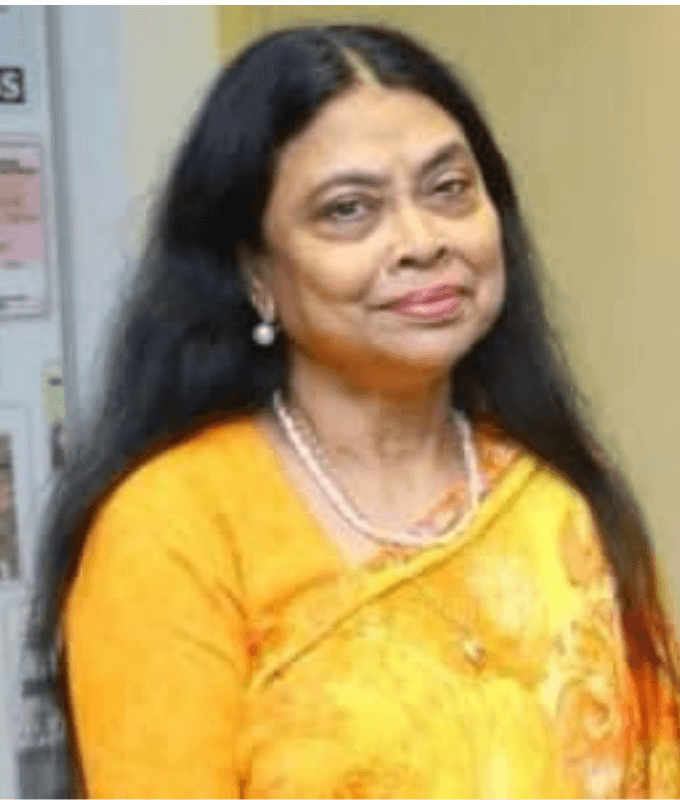
Roquia Haider
Former Chief of the Bangla Department, Voice of America
Profile of Roquia Haider
Roquia Haider’s life is a testament to resilience, dedication, and excellence in journalism. Born in Kolkata in 1946, her journey from a vibrant childhood in India to becoming the Chief of the Bangla Department at the Voice of America (VOA) is a story of unwavering determination and remarkable achievements. Growing up in Kolkata’s bustling streets, Roquia’s early years were shaped by her father, a businessman, who instilled in her a sense of purpose and perseverance. Married while still in high school, she embraced the dual roles of wife and mother at a young age. However, with the steadfast support of her family, she pursued her education, completing her Master’s degrees in political science and economics at Dhaka University in 1968.
Her journey into media began in 1968 when she joined Chattogram Radio as a news presenter. Despite her talents in drama, dance, and singing during her youth, Roquia found her true calling in journalism. Her sweet and commanding voice resonated with audiences, earning her widespread recognition. By 1974, she was presenting news for Bangladesh Betar and Bangladesh Television, becoming a household name in Bangladesh.
Roquia’s life took a tragic turn in 1971 during the Liberation War of Bangladesh. Her husband, who worked in a shipping company, was killed during the conflict, leaving her a widow at just 24. This profound loss shaped her character, fueling her determination to succeed and make a difference.
In 1981, she moved to the United States, marking the beginning of her illustrious three-decade career at the Voice of America. Starting as a journalist, Roquia rose to become the Managing Editor of the Bangla Department in 2001. Her role extended beyond news presentation, encompassing writing, translation, editing, and producing content that connected the Bengali-speaking diaspora with global news.
Roquia’s work at VOA went far beyond the confines of the newsroom. As a correspondent, she covered international events, including the Olympics, Commonwealth Games, and World Cups in football and cricket. She earned the moniker “Sportscaster in Sari,” becoming a symbol of cultural pride while reporting from global arenas. Among her career highlights was interviewing Nobel laureate Mother Teresa—a moment that remains deeply cherished.